
Behaviorism
Systematic approach focusing on observable behavior and environmental events.

Tekks · CC BY-SA 3.0
Behaviorism is a systematic approach to understanding the behavior of humans and other animals. It assumes that behavior is either a reflex elicited by antecedent stimuli or a consequence of an individual's history, including reinforcement and punishment, along with current motivational state and controlling stimuli. Behaviorism emerged in the early 1900s as a reaction to depth psychology and other traditional forms of psychology, which often had difficulty making testable predictions.
- field
- Psychology
- known_for
- Systematic approach focusing on observable behavior and environmental events
- key_figures
- John B. Watson, B. F. Skinner, Ivan Pavlov, Edward Thorndike
Lore & Background
Behaviorism emerged in the early 1900s as a reaction to depth psychology and other traditional forms of psychology, which often had difficulty making predictions that could be tested experimentally. It was derived from earlier research in the late nineteenth century, such as when Edward Thorndike pioneered the law of effect, a procedure that involved the use of consequences to strengthen or weaken behavior. Watson devised methodological behaviorism, which rejected introspective methods and sought to understand behavior by only measuring observable behaviors and events.
Reader's Guide
Behaviorism's significance lies in its systematic approach to understanding behavior through environmental events, reinforcement, and punishment, shifting psychology toward empirical, testable methods. It largely replaced depth psychology and influenced fields such as applied behavior analysis, used in treating developmental differences like autism and substance abuse. Although the cognitive revolution of the late 20th century largely replaced behaviorism as an explanatory theory, behaviorism and cognitive psychology have complemented each other in cognitive-behavioral therapies, which have demonstrated utility in treating pathologies including simple phobias, PTSD, and mood disorders. The various branches of behaviorism—including methodological, radical, psychological, and theoretical behaviorism—reflect ongoing theoretical refinements and applications.
Did You Know?
- Behaviorism assumes behavior is either a reflex elicited by antecedent stimuli or a consequence of an individual's history, including reinforcement and punishment.
- The application of radical behaviorism, known as applied behavior analysis, is used in contexts including treatment of autism and substance abuse.
Origins and Theoretical Foundations
Cognitivism rose to prominence during the 1950s as a deliberate counter-movement to the dominant behaviorist paradigm in psychology. Its adherents argued that behaviorism, while acknowledging the existence of thought, reduced thinking to mere observable behavior and thereby failed to explain the inner machinery of the mind. Cognitivists insisted that the way a person thinks shapes their outward actions, meaning cognition cannot simply be classified as another behavior. The movement drew its name from the Latin verb cognoscere, which carries the dual sense of knowing and processing information, and it positioned itself as an information-processing tradition rooted in earlier scholarly work on thought and problem solving. A further claim emerged that thinking was so central to the discipline that it warranted its own dedicated field of inquiry. It is worth noting that cognitivists generally assumed a particular kind of mental operation aligned with computationalism, and in more recent years the framework itself has come under pressure from the emerging perspective known as postcognitivism.
Cognitive Development and the Architecture of Attention
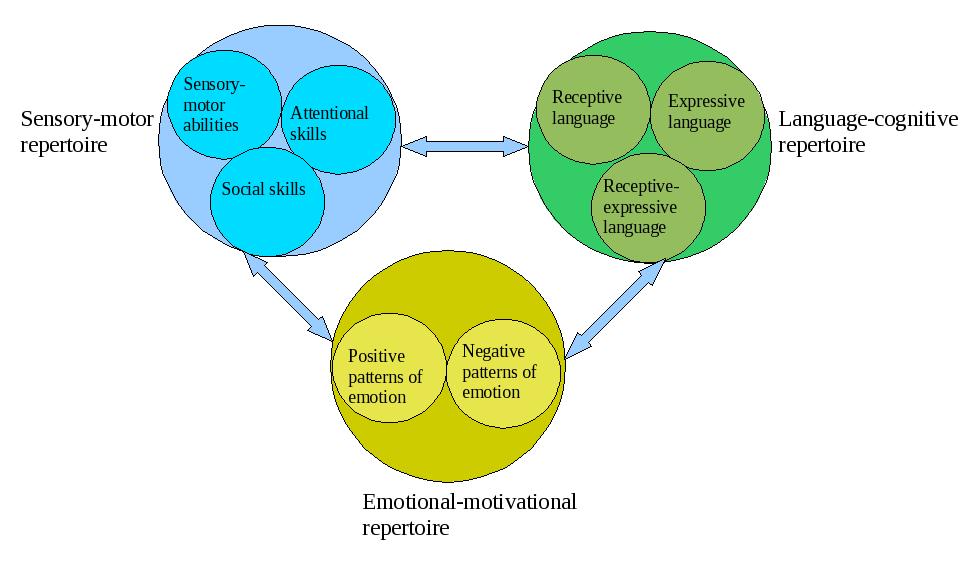
The gradual expansion of an individual's intellectual reach is what scholars term cognitive development, a process powered by a complex physiological system that continuously absorbs environmental stimuli capable of generating knowledge and skill. In the home, parents handle this transmission informally, while schools provide a more structured, formal channel. Attention sits at the very foundation of this developmental arc, representing a person's capacity to direct and sustain concentration on a particular task. It is distinct from broader temperamental traits such as persistence or distractibility, which color everyday environmental interactions; attention, by contrast, governs behavior during specific activities like a student focusing on an instructor. At any given moment, an organism's attentional field is described as three concentric rings: a zone beyond awareness, a peripheral margin, and a narrow core of focus, bounded by finite mental capacity. The information-processing view holds that memory and attention jointly underpin cognition, with children initially attending selectively to goal-relevant situations and gradually broadening their absorptive range as they mature. Researchers further distinguish executive-driven mental attention from spontaneous perceptual attention triggered by novel sensory input.
The Internal Mechanics of Learning
Cognitive theory places its primary emphasis on how knowledge is acquired and how the mind's internal structures grow over time. Rather than cataloguing the mechanical actions a learner performs, the framework traces the full arc of information: its initial reception, its processing and integration into pre-existing schemas, and its later retrieval during recall. A central tenet is that learning is inseparable from what the learner already knows; new material must be woven into the architecture of prior understanding through an internal codification of mental structures. This makes the student an indispensable active participant, engaging in mental planning, goal setting, and organizational strategies rather than passively receiving instruction. Environmental conditions and instructional design certainly matter, but cognitive theorists add a layer of internal operations—coding, transforming, rehearsing, storing, and retrieving information—that sit alongside the external setup. The learner's own thoughts, beliefs, and value attitudes are treated as integral components of the learning process rather than peripheral noise.
Memory, Transfer, and the Pursuit of Complex Learning
Memory occupies a pivotal role in the cognitive account of learning, serving as the repository where information is held in an organized and meaningful configuration. Teachers are cast as facilitators who help structure and optimize that information, while instructional designers employ techniques such as analogies, mnemonic devices, and hierarchical relationships to help learners graft new material onto their existing knowledge base. Forgetting, in this view, is not a failure but an inability to retrieve; it may even function as a useful mechanism for discarding information that is situationally irrelevant once its relevance has been assessed. Transfer represents the practical payoff: a learner has truly transferred knowledge when they can apply rules, concepts, and discriminations across different contexts and conditions, using prior knowledge to spot similarities and differences in novel situations. Cognitive theory largely accounts for the most complex forms of learning—reasoning, problem solving, and information processing—under a shared goal of delivering knowledge as efficiently and effectively as possible. Simplification and standardization serve as key techniques, with knowledge decomposed into basic building blocks, a strategy that shows a notable kinship with the behaviorist model of the knowledge-transfer environment.
Gallery
Frequently Asked Questions
Who is Behaviorism?
Behaviorism is a school of thought within psychology that treats all human and animal behavior as something that can be mapped through observable events and environmental triggers. It rejects the idea that internal mental states are the primary lens for understanding actions.
What are Behaviorism's powers/role?
Its core method is breaking every action down into either a reflex triggered by a preceding stimulus or a product of an organism's reinforcement and punishment history. It also factors in current motivation and controlling stimuli to explain why a behavior occurs at a given moment.
Who are Behaviorism's key figures?
The approach is most closely associated with John B. Watson, B. F. Skinner, Ivan Pavlov, and Edward Thorndike, each of whom contributed foundational work on conditioning, operant learning, and the relationship between stimuli and responses.
How did Behaviorism's story begin?
It emerged in the early 1900s as a direct pushback against depth psychology and other traditions that struggled to produce testable, falsifiable predictions. By anchoring itself in what could be observed and measured, it gave psychology a more empirical footing.
Why is Behaviorism important?
It shifted the field toward systematic, observable evidence and made it possible to design controlled experiments on learning and behavior. That emphasis on measurable cause-and-effect relationships still underpins much of modern applied psychology and behavioral therapy.
More in Mental Health & Psychology 1-20
Spotted an error? Know more?
This is a living reference — every entry is fact-audited, and reader corrections feed straight into our audit queue. Suggest an edit · See this site's audit record