
Behavioral neuroscience
Studies biological and neural substrates of behavior and experience.

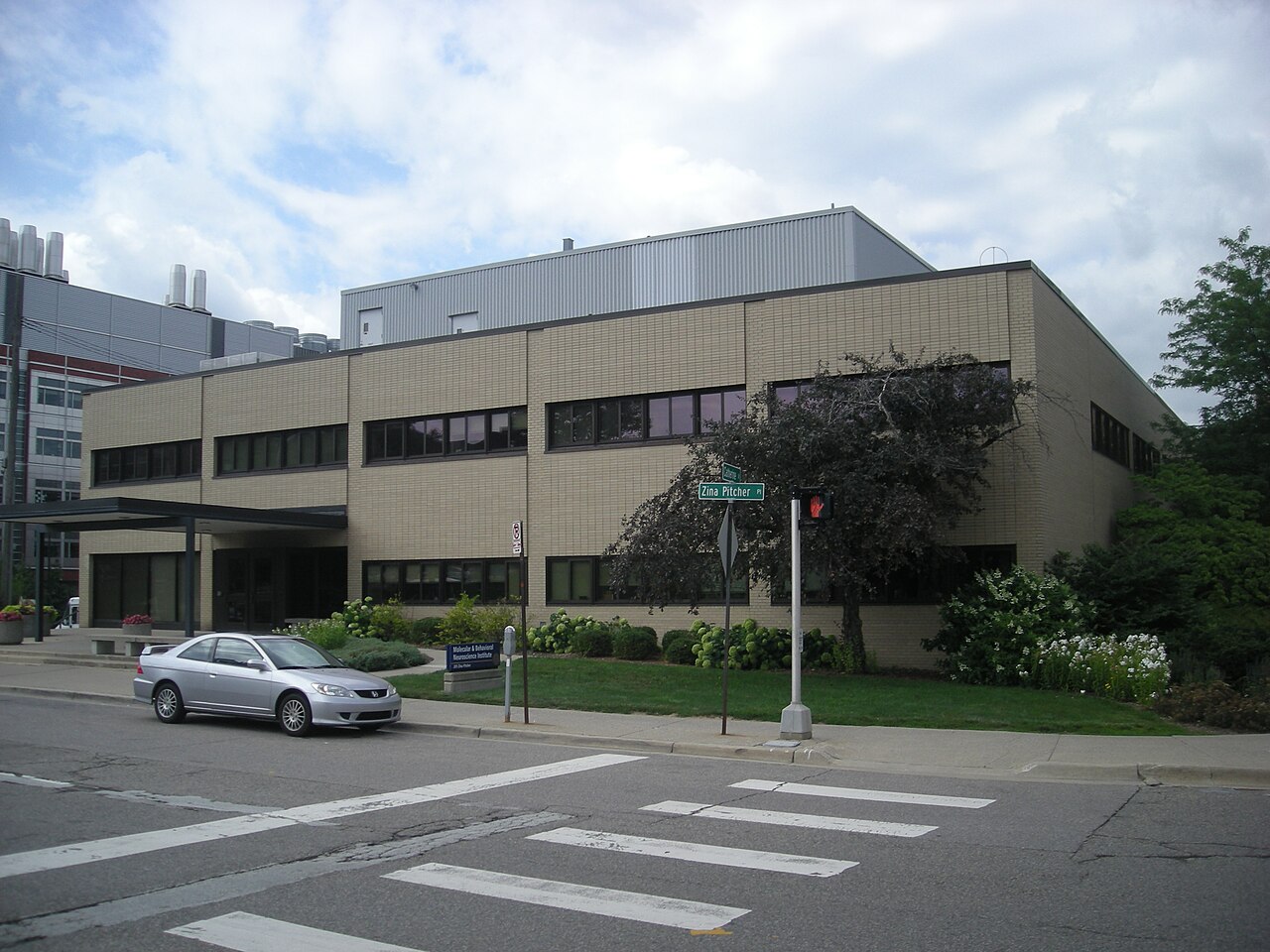
Michael Barera · CC BY-SA 4.0
Behavioral neuroscience, also known as biological psychology, biopsychology, or psychobiology, is a field within the broader interdisciplinary domain of neuroscience. Its primary focus is the biological and neural substrates underlying human experiences and behaviors. Derived from an earlier field called physiological psychology, it applies principles of biology to study the physiological, genetic, and developmental mechanisms of behavior in humans and other animals.
- field
- Behavioral neuroscience
- also_known_as
- Biological psychology, biopsychology, psychobiology
- derived_from
- Physiological psychology
- key_figures_mentioned
- René Descartes, William James, Claude Bernard, Charles Bell, William Harvey, Plato, Aristotle, Wilder Penfield, Rassmussen, Knight Dunlap, Solomon Carter Fuller, Alois Alzheimer
- society_founded
- Society for Neuroscience (first conference 1971)
Lore & Background
Behavioral neuroscience emerged from scientific and philosophical traditions in the 18th and 19th centuries. René Descartes proposed that the pineal gland was the point of contact between mind and body, and elaborated a theory of reflexes based on bodily fluids. William James argued that psychology should be grounded in an understanding of biology. The field traces its roots to the emergence of physiology from anatomy, with physiologists like Claude Bernard, Charles Bell, and William Harvey convincing the scientific community that reliable data could be obtained from living subjects.
Reader's Guide
Behavioral neuroscience examines the biological bases of behavior through research involving neuroanatomical substrates, environmental and genetic factors, effects of lesions and electrical stimulation, developmental processes, neurotransmitters, hormonal influences, and drugs. Important topics include learning and memory, sensory processes, motivation and emotion, and genetic and molecular substrates. Subdivisions include cognitive neuroscience, which emphasizes biological processes underlying human cognition.
Did You Know?
- The mind-body problem, debated by Plato and Aristotle, is a foundational question for behavioral neuroscience.
- The first conference for the Society of Neuroscience occurred in 1971.
Philosophical Roots and the Mind-Body Problem
The discipline of behavioral neuroscience traces its intellectual lineage back millennia, to a question that has haunted thinkers since at least 1700 B.C.: what links the mind to the body? Plato championed the brain as the seat of all thought, while Aristotle countered that it merely cooled the passions generated by the heart. Centuries later, René Descartes proposed physical models for both animal and human behavior, famously identifying the pineal gland as the meeting point of mind and body, and even suggested that the pneumatics of bodily fluids could account for reflexes—a notion reportedly sparked by watching moving statues in a Parisian garden. William James, in his landmark text The Principles of Psychology, argued that any serious scientific study of the mind must be anchored in biology. These philosophical and early scientific threads collectively laid the groundwork for what would eventually crystallize into a formal discipline. The mind-body problem, framed through the competing lenses of monism and dualism, served as the essential stepping stone that pushed later researchers to seek concrete, testable connections between neural tissue and psychological experience.
Pioneers Who Shaped the Field
Several individuals left indelible marks on behavioral neuroscience. Solomon Carter Fuller, the first African American psychiatrist, worked as a research assistant under Alois Alzheimer in 1904, studying presenile dementia. In 1912 he published the first review of Alzheimer's disease, including details of his patient—the ninth person ever diagnosed with the condition. Fuller also advocated for Black veterans facing misdiagnosis that would strip them of military benefits, and trained staff to recognize neurological side effects of sexually transmitted infections. In 1969, the American Psychiatric Association established the Solomon Carter Fuller Award to honor Black pioneers in the field. Meanwhile, Wilder Penfield, working alongside Rasmussen, mapped the cerebral cortex by studying epileptic patients, a breakthrough in understanding localization of function. The tragic case of Phineas Gage further illustrated how specific brain regions govern behavior. Knight Dunlap coined the term "psychobiology" in his 1914 book An Outline of Psychobiology and founded the journal Psychobiology, explicitly dedicated to the interconnection of mental and physiological functions.
Research Methods and Core Questions
Behavioral neuroscientists employ a remarkably wide toolkit to probe the biological underpinnings of behavior. Their investigations span neuroanatomical substrates, the roles of genetic and environmental factors, the consequences of targeted lesions and electrical stimulation, developmental trajectories, direct recording of electrical activity, the chemistry of neurotransmitters, hormonal influences, and the behavioral effects of drugs. These methods are directed at a set of central questions: how do organisms learn and form memories, how are sensory experiences processed, what drives motivation and emotion, and what genetic and molecular mechanisms underlie the biological bases of behavior? The field also encompasses cognitive neuroscience as a subdivision, which zeroes in on the biological processes behind human cognition. While behavioral neuroscience and cognitive neuroscience share a common concern with the neuronal and biological foundations of psychology, they differ in emphasis—one prioritizes behavior broadly, the other prioritizes cognition specifically. Both, however, apply the principles of biology to understand the physiological, genetic, and developmental mechanisms that shape experience in humans and other animals.
From Anatomy to a Recognized Discipline
The path from scattered philosophical speculation to a recognized scientific discipline was neither quick nor straightforward. In the 18th and 19th centuries, the dominant anatomists distrusted experimentation on living organisms, but physiologists like Claude Bernard, Charles Bell, and William Harvey demonstrated that reliable data could indeed be gathered from living subjects. This shift from static dissection to dynamic physiology was crucial in legitimizing the experimental approach that behavioral neuroscience would later depend on. The localization-of-function debate, pitting functional specialization against equipotentiality, further sharpened the field's focus and drove researchers to identify which brain regions control which behaviors. The term "psychobiology" entered modern usage through Knight Dunlap's 1914 work, and the field eventually consolidated under multiple names—biological psychology, biopsychology, psychobiology—reflecting its interdisciplinary nature. Neuroscience as a unified discipline is still relatively young; the first Society of Neuroscience conference took place in 1971, convened specifically to merge the various subfields that had been developing in parallel.
Gallery
Frequently Asked Questions
What is Behavioral neuroscience?
Behavioral neuroscience is a branch of neuroscience dedicated to uncovering the biological and neural systems that generate the experiences and behaviors we see in humans and other animals. It is also called biological psychology, biopsychology, or psychobiology, and it evolved directly from the older discipline of physiological psychology.
What are Behavioral neuroscience's powers or role?
Its central job is to map physiological, genetic, and developmental mechanisms onto observable behavior, effectively translating biology into a language that explains why organisms act the way they do. It serves as the bridge between raw biological processes and the psychology of experience.
How does Behavioral neuroscience's story end?
As a living field it has no fixed ending, but its modern institutional identity crystallized when the Society for Neuroscience convened its first conference in 1971. It keeps evolving as new imaging, genetic, and developmental tools refine our picture of neural substrates.
Why is Behavioral neuroscience important?
It supplies the mechanistic, biological grounding that mental-health research and treatment need, linking symptoms to specific neural and genetic pathways. Without that grounding, interventions would lack the precision required to target the right biological systems.
Who are Behavioral neuroscience's key figures?
The field's lineage stretches from ancient thinkers like Plato and Aristotle through early modern pioneers such as René Descartes, William James, Claude Bernard, Charles Bell, and William Harvey. More directly, figures like Wilder Penfield, Solomon Carter Fuller, Alois Alzheimer, Rassmussen, and Knight Dunlap are frequently cited as foundational contributors.
More in Mental Health & Psychology 1-20
Spotted an error? Know more?
This is a living reference — every entry is fact-audited, and reader corrections feed straight into our audit queue. Suggest an edit · See this site's audit record